Tango Musicality
METU Courses and Events
Tango Musicality
Tango Musicality training is a comprehensive program aimed at helping dancers develop a more conscious perception of the structure, dynamics, and musical signals that guide tango dance. Participants learn to develop more sensitive, creative, and musically responsive reactions to music—both in social dancing and on stage.
Tango music has a multi-layered, polyphonic structure. As a musician, I believe many rhythmic, melodic, and dynamic elements that guide dancers operate simultaneously. For this reason, the first stage of training focuses on developing participants' ability to hear, distinguish, and identify these musical dynamics.
Straight rhythms, syncopated structures, melodic flows, accent changes, and orchestral characters are key elements that directly affect a dancer's movement quality, interpretation, and partner communication. Dance training that ignores these dynamics risks becoming a purely technical repetition process lacking musical depth. The core approach is that dance takes shape in accordance with musical signals. Content is presented in a progressive structure from simple to complex.
Main topics covered in the training:
- Rhythmic structures and rhythmic variations
- Syncopation and contrast rhythms
- Melodic dynamics and phrase structures
- Individual movement exercises accompanying music
- Static and creative movement approaches in partner dancing
- Musical accent and energy use within dance
- Musical characters of major orchestras that shaped tango history
- Musical forms
- Applied analysis of the influence of different orchestras on dance
Tango Composition
In Tango Composition courses, participants work on rhythmic, melodic, and harmonic structures applicable to both social dance and stage performances. The dynamics of melodic structures are examined in detail; rhythmic structure, harmony, counterpoint, and orchestration necessary for tango arrangements are covered through hands-on practice.
These courses aim to develop a perspective that not only listens to tango music, but also analyzes, interprets, and creates it.
METU Courses
Tango Musicality MUS464
Tango Music Analysis, Choreography Techniques, and Orchestra Styles for Dancers
This course offers a detailed study of Argentine tango music, focusing on the musical languages of major tango composers and orchestras. Through analytical listening and applied musical practice, students explore the evolution of tango from its classical period to contemporary and Nuevo Tango styles.
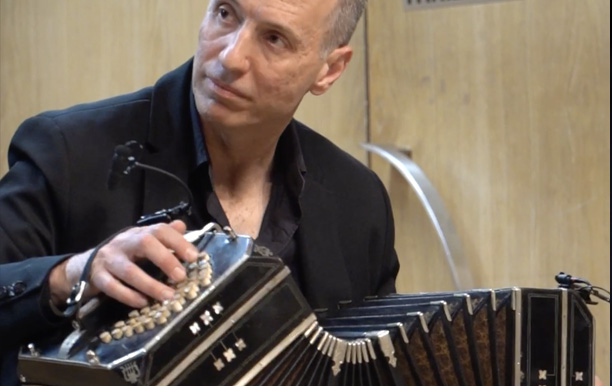
Key musical elements such as marcato and legato articulation, rhythmic complexity, syncopation, variation techniques, melodic phrasing, and expressive interpretation are addressed. Special attention is given to the bandoneon as the central instrument of tango, and to the relationship between tango music and Argentine tango dance.
 MUS464 Syllabus — METU Course Catalog
Creating and Performing Tango Music MUS366–369
Rhythmic and Melodic Dynamics, Live Orchestra Performance, Arrangement and Composition
This course examines tango music through its creation and performance, with particular attention to stylistic, rhythmic, melodic, and harmonic features. Designed as a practice-oriented course, it emphasizes hands-on performance and ensemble work.
Alongside performance practice, the course introduces basic principles of tango arranging and composition, supporting students in developing an understanding of tango as both a performed repertoire and a creative musical tradition.