The Invisible Story Behind a Concert
What Happens Before the First Note?
After a concert, audience members sometimes come up to me or my fellow musicians and say:
"That was such a wonderful concert. We wish it had lasted a little longer."
Whenever I hear that, I find myself thinking the same thing:
"I wish they could see everything that happened before the concert began."
I've wanted to write about this for a long time. It's not the kind of story you can tell in a quick conversation after a performance, so I decided to dedicate a page on my website to it.
The truth is that, for us, a tango concert does not begin on the day we step onto the stage. In many cases, it starts weeks or even months earlier. What may appear to be a brief performance from the audience's perspective is actually the result of countless hours of planning, preparation, rehearsal, and refinement.
Whenever a concert is scheduled, the first question we ask ourselves is:
"Who are we playing for?"
The answer to that question shapes everything that follows.
If we are performing at a milonga—a social tango dance event—the dancers become our primary focus. We carefully select what tango musicians call para bailar repertoire: music specifically suited for dancing, with clear rhythms, stable tempos, and an energy that supports movement on the dance floor. The goal is not simply to play well; it is to create a musical environment that dancers can connect with and respond to throughout the evening.
A completely different approach is required when performing alongside professional tango dancers. In stage tango productions, dramatic contrasts become important: sudden accents, powerful rhythmic changes, expressive melodies, and dynamic tempo shifts. In these performances, both dancers and musicians share the spotlight. The music is no longer there solely to support movement—it becomes part of the storytelling itself.
Then there are concerts designed purely for listening audiences. These performances allow musicians greater artistic freedom. Interpretation, phrasing, dynamics, and musical expression take center stage. The orchestra can explore a wider palette of colors and emotions, showcasing both the collective sound and the individual voices within the ensemble.
Once the repertoire has been selected, the next phase begins:
ARRANGING THE MUSIC
Every concert has its own instrumentation.
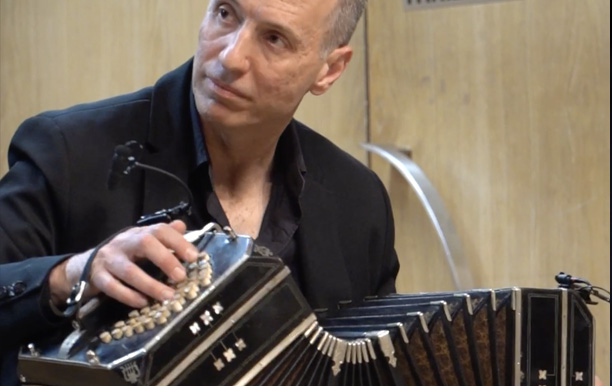
Sometimes we perform as a traditional tango quartet consisting of bandoneon, violin, piano, and double bass. Other times we add a vocalist and become a quintet. We may also perform as a duo, trio, or larger ensemble with additional instruments.
Each change in instrumentation requires a new arrangement. Musical lines must be redistributed, harmonies adjusted, and roles reassigned among the players. Although it may sound straightforward, arranging is one of the most important parts of the entire process. A well-crafted arrangement can transform a good piece of music into something truly memorable.
I hope to write a separate article one day about how tango arrangements are created.
Once the arrangements are complete, the sheet music is distributed to the musicians, and individual practice begins.
A musical phrase that lasts only a few seconds in a performance may be repeated dozens of times during preparation. Slowly, the notes on the page stop being symbols and begin to become music.
Yet individual practice is only half the journey.
The real challenge in a tango orchestra is learning how to make music together.
After schedules are coordinated and rehearsal space is secured, group rehearsals finally begin.
The first rehearsals are often focused on survival. Everyone is concentrating on their own part, trying to get through the music from beginning to end. We play, listen, stop, discuss, make corrections, and take notes. With each rehearsal, the ensemble becomes a little more connected.
Eventually something interesting happens.
The music starts to come alive.
Musicians begin sensing each other's breathing, body language, timing, and intentions. These details may seem insignificant from the outside, but they are precisely what create the sense of unity that audiences hear during a performance.
And then, before long, concert day arrives.
Concert Day
Concert days have their own unique atmosphere.
Once I wake up and realize that today's the day, my focus shifts entirely toward the performance. Instruments are checked. If we're bringing our own equipment, spare cables, microphones, and sheet music are carefully packed. Performance clothes are prepared. There is usually some final practice.
A few hours before the concert, we head to the venue.
Upon arrival, a new phase begins: the sound check.
This process takes place in an empty hall, but it can sometimes be just as exhausting as the concert itself. Every instrument's balance must be adjusted. Microphones are tested. The acoustics of both the stage and the hall are evaluated. Musicians work with the sound engineer to ensure they can hear each other properly through their monitors.
Once the sound check is finished, all that's left is the final preparation—and waiting.
Oddly enough, these moments backstage are often some of the most enjoyable.
The atmosphere becomes difficult to describe. Some musicians quietly review their sheet music one last time. Others sit in silence. Some rehearse difficult passages again. And some—usually me—prefer to joke around and keep the mood light.
About fifteen minutes before the performance, we gather backstage and wait for the signal to enter.
We can hear the audience taking their seats. We try to stay quiet. We smile. We encourage one another.
And if we're performing with Tango Artı Orchestra, we usually carry on our now-traditional pre-concert ritual: a collective humming session. 😀
Finally, the stage manager gives the signal.
Sometimes there is an announcement. Sometimes there isn't.
We walk onto the stage.
The applause begins.
Ironically, in many concert halls we can barely see the audience because of the stage lights. At best, the first few rows appear as vague silhouettes. Beyond that lies darkness. To me, it often feels as if I'm standing on a pier at night, playing music toward an invisible sea.
Then the first note is played.
And everything changes.
Months of preparation suddenly disappear into the background. Time starts moving differently. Sections that took hours to rehearse pass by in a matter of moments.
We usually like to open concerts with energetic pieces and finish with music that leaves a strong final impression. Before we know it, the last note has been played.
The applause returns.
We bow.
Sometimes the audience asks for one more piece.
And eventually, after a final farewell, we leave the stage.
Later, audience members may once again come over and say:
"That was wonderful. We wish it had lasted longer."
And every single time, I find myself thinking:
"I wish they could have seen everything that happened before the first note was ever played." 🥰
Back to Blog